
 Daniel Taylor
Making a sale is always exciting, whether it's your first customer or your thousandth. However, successful businesses don't simply celebrate the sale and move on. They ask an important question: why did that customer buy?
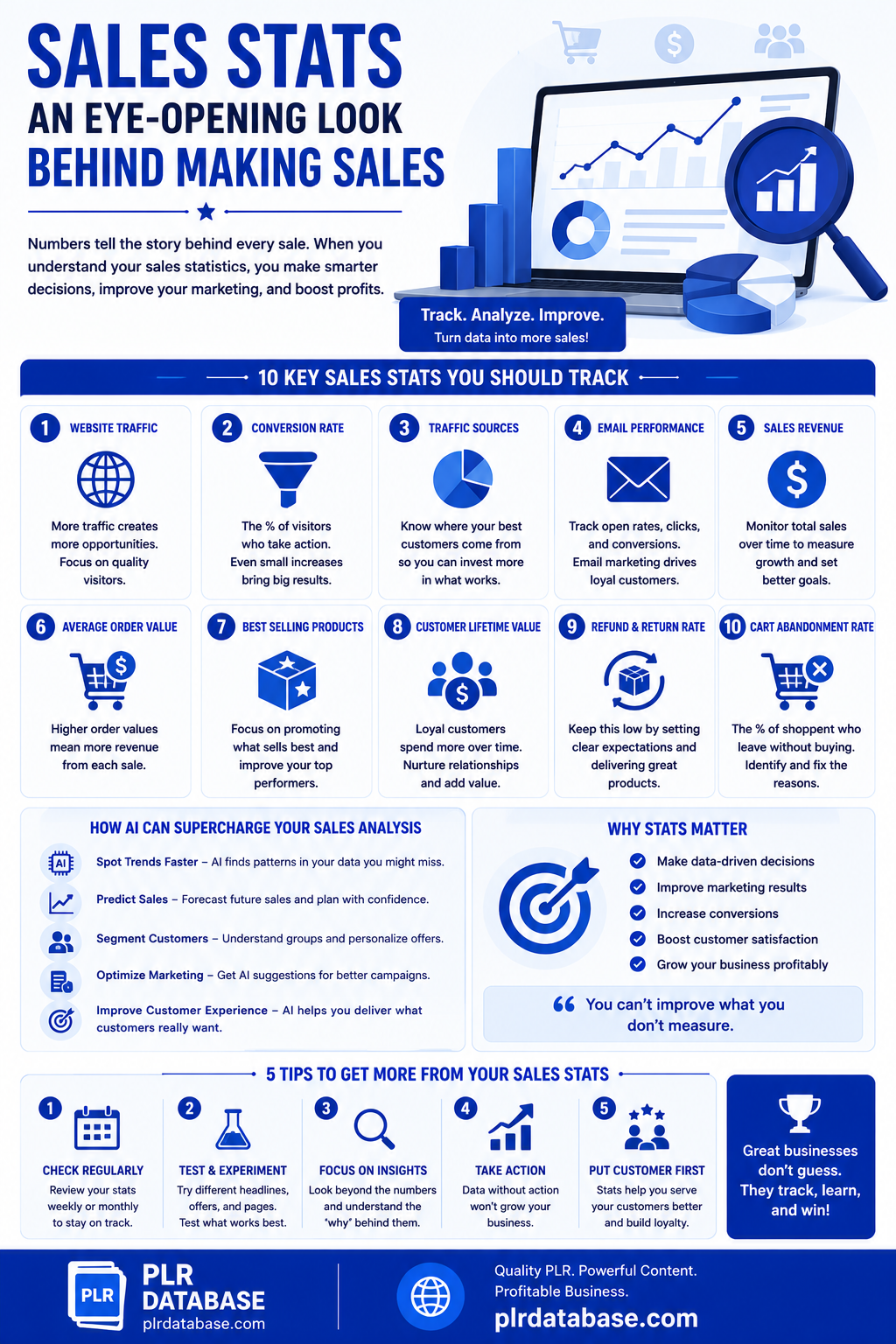
Understanding your sales statistics gives you valuable insights into how your business is performing. Instead of relying on guesswork, you begin making decisions based on real data. That data helps you improve your marketing, optimise your website, increase your conversion rates, and ultimately generate more sales.
Many business owners only look at how much money they've made. While revenue is important, it only tells part of the story.
The real power comes from understanding what happened before the purchase, what influenced the customer, and what encouraged them to complete the transaction.
Modern AI tools have made analysing business data easier than ever. Today, even small businesses can gain insights that were once only available to large corporations.
When combined with website analytics and customer behaviour tracking, these statistics become one of the most valuable assets your business can have.
In this guide, we'll explore the most important sales statistics every online business owner should understand and explain how they can help you grow your business more effectively.
In This Article
Why Sales Statistics Matter
Every visitor who lands on your website leaves behind useful information.
Some browse several pages.
Some join your email list.
Some leave immediately.
Some become paying customers.
Sales statistics allow you to understand those behaviours instead of making assumptions.
By analysing your numbers regularly, you can identify:
- What's working well.
- What's underperforming.
- Which marketing channels generate sales.
- Where customers leave your website.
- Which products perform best.
- How buyers interact with your content.
Small improvements based on accurate data often produce significant increases in revenue.
Track Your Website Traffic
Before anyone can purchase from you, they first need to visit your website.
That's why traffic is one of the first statistics you should monitor.
Useful traffic metrics include:
- Total visitors.
- Unique visitors.
- Returning visitors.
- Page views.
- Session duration.
- Bounce rate.
These numbers help you understand whether your website is attracting the right audience.
More importantly, they reveal whether visitors are finding your content engaging enough to stay.
Understand Your Conversion Rate
Traffic alone doesn't generate profits.
Conversions do.
Your conversion rate measures how many visitors complete a desired action.
For example:
- Purchasing a product.
- Joining your email list.
- Downloading a lead magnet.
- Booking a consultation.
- Registering for a webinar.
Even a small increase in conversion rate can dramatically improve your overall revenue without increasing traffic.
That's why conversion optimisation should become an ongoing process.
Measure Where Your Customers Come From
Not all traffic sources perform equally.
Some visitors arrive ready to buy.
Others are simply researching.
Track your traffic sources, including:
- Google Search.
- YouTube.
- Facebook.
- Instagram.
- Pinterest.
- LinkedIn.
- Email marketing.
- Referral websites.
- Paid advertising.
Knowing where your best customers originate helps you invest more time in strategies that produce results.
Monitor Your Email Marketing Performance
Email marketing continues to deliver one of the highest returns on investment in digital marketing.
However, your email list should be measured regularly.
Monitor statistics such as:
- Open rates.
- Click-through rates.
- Unsubscribe rates.
- Conversion rates.
- Revenue per email.
- Subscriber growth.
These numbers show whether your emails are engaging your audience or being ignored.
Small improvements to subject lines and content can significantly increase engagement.
Learn Which Products Sell Best
Not every product performs equally.
Sales data quickly reveals which products deserve more attention.
Monitor:
- Best-selling products.
- Highest profit margins.
- Refund rates.
- Average order value.
- Customer reviews.
- Repeat purchases.
Rather than constantly creating new products, improve and promote your existing winners.
Successful businesses often generate most of their revenue from a relatively small number of products.
Understand Customer Behaviour
One of the most valuable statistics available today is customer behaviour.
Analytics tools can show:
- Which pages visitors read.
- Where they leave.
- Which buttons they click.
- Which products they compare.
- How long they stay.
Understanding this journey allows you to improve the customer experience.
Removing obstacles often increases sales without increasing traffic.
Use AI to Analyse Your Business
Artificial intelligence has transformed business analytics.
Instead of manually analysing large amounts of data, AI can quickly identify patterns and trends.
AI can help you:
Identify Trends
Recognise changes in customer behaviour.
Predict Sales
Forecast future performance based on historical data.
Segment Customers
Group buyers according to interests and purchasing habits.
Improve Marketing
Recommend better headlines, emails, and landing pages.
Optimise Pricing
Identify pricing strategies that improve conversions.
Detect Opportunities
Highlight products or pages that deserve additional attention.
AI doesn't replace your judgement.
It simply helps you make better-informed decisions more quickly.
Test Everything
One of the biggest advantages of online business is the ability to test almost everything.
Never assume your first version is the best version.
Test elements such as:
- Headlines.
- Product images.
- Pricing.
- Buttons.
- Email subject lines.
- Landing pages.
- Calls to action.
- Bonus offers.
Small improvements made consistently often produce remarkable long-term growth.
Successful businesses rarely stop testing.
Focus on Customer Lifetime Value
Many new businesses focus only on making the first sale.
Long-term businesses think differently.
Customer Lifetime Value measures how much a customer spends with your business over time.
Increasing repeat purchases often produces more profit than constantly finding new customers.
Encourage repeat business through:
- Email newsletters.
- Product updates.
- Loyalty bonuses.
- Memberships.
- Helpful content.
- Excellent customer support.
Returning customers are usually easier to serve and less expensive to market to.
Use Data to Improve Your Marketing
Your marketing becomes much more effective when it's guided by data.
Instead of guessing what your audience wants, use your analytics to identify patterns.
For example:
- Which blog articles receive the most traffic?
- Which YouTube videos generate subscribers?
- Which emails create sales?
- Which keywords attract buyers?
Once you know what's working, create more of it.
Data removes much of the uncertainty from marketing decisions.
Review Your Statistics Regularly
Analytics only become valuable when you actually use them.
Set aside time every month to review your business performance.
Look for:
- Growth trends.
- Traffic changes.
- Sales increases.
- Conversion improvements.
- Marketing performance.
- Customer behaviour.
Avoid making decisions based on one day's results.
Long-term trends provide much more reliable information.
Consistent monitoring helps you spot problems before they become major issues.
Final Thoughts
Sales statistics are much more than numbers on a dashboard. They tell the story of how people discover your business, interact with your website, and eventually become customers.
When you understand those numbers, you stop relying on guesswork and begin making smarter decisions that improve every part of your business.
From increasing conversion rates to identifying your best-performing products, analytics provide valuable insights that help you grow more efficiently.
I hope this guide has shown you that tracking sales statistics doesn't have to be complicated. Start by monitoring a few key metrics, review them consistently, and use AI tools to uncover trends you may have otherwise missed.
Focus on understanding your customers, improving their experience, and testing small changes over time.
Every statistic represents an opportunity to learn something valuable, and the businesses that continue analysing and improving their performance are usually the ones that enjoy the greatest long-term success.
About the Author









0 Comments
Start The Conversation